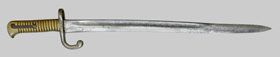
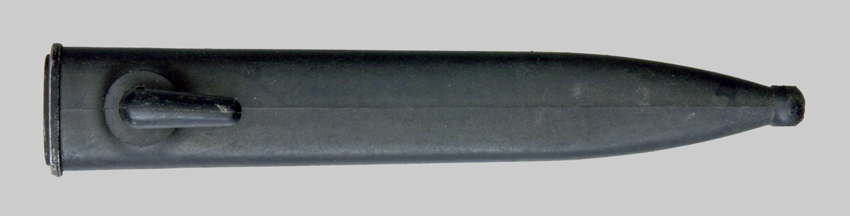
This is one of the more commonly encountered bayonet/scabbard combinations. The scabbard body is plastic, with a steel throatpiece and round, flat steel frog stud.

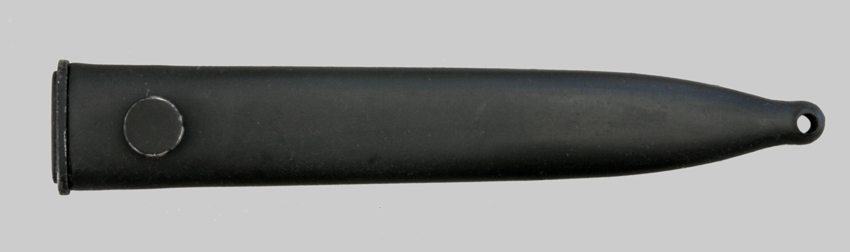
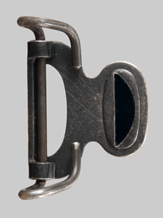
Belgium—FAL Type C Bayonet with U.S. M1910-Style Wire Belt Hanger
This example is painted black overall and has an unusual scabbard. The scabbard is unusual in a couple of respects:
—It has a U.S. M1910-style wire belt hanger affixed to the scabbard throat piece.
—The throatpiece is oriented so that the socket faces inwards when carried. This orientation is generally associated with South African scabbards, however, this scabbard is not South African.

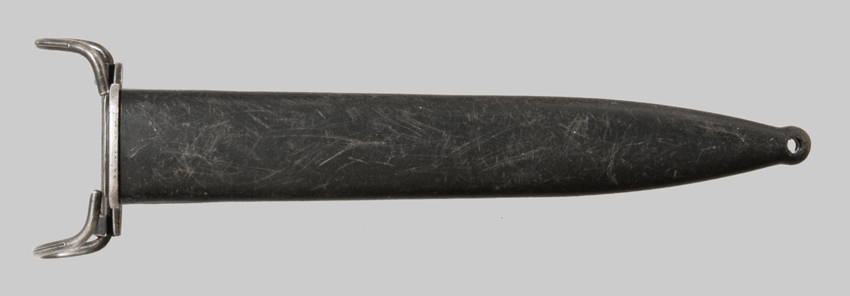
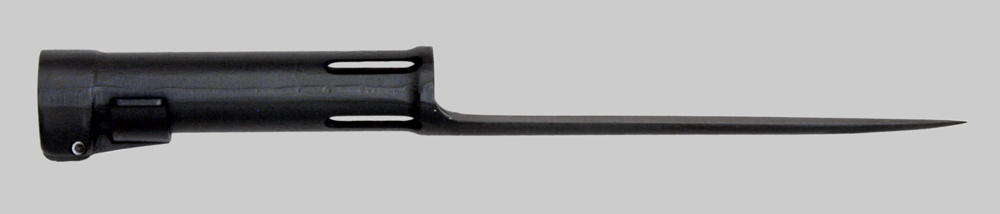
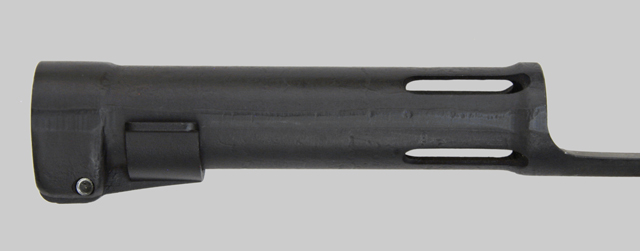
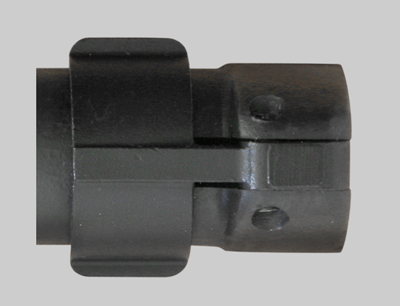
Belgium—FAL Type C Bayonet Made by Casting
This is believed to be the final Fabrique Nationale production type (ca. 1977–88), as FN sought to reduce cost of the FAL product. FN constructed the socket by forging upper and lower halves using a drop hammer. Hot metal was poured in between the halves, to make the complete blank, which was machined to create the tubular socket. The sprue line is evident in the pictures below. I have seen an unfinished casting that has a FN mold mark, so know that FN used this construction method. The scabbard body is plastic, with an integral web belt hanger.
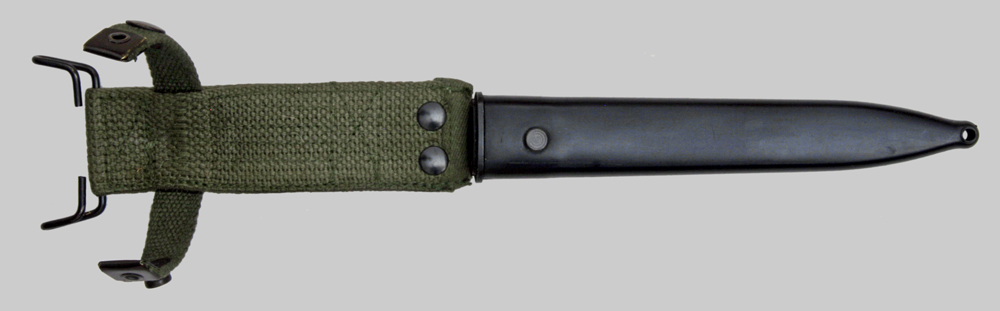
Brazil—IMBEL Type C Bayonet
This Brazilian Type C Bayonet is a later example, with the M1965 spring catch. This example is unmarked, with a black paint finish overall. The scabbard has a plastic body, with an integral cotton web belt hanger. The throatpiece is positioned so the socket faces outward. The belt hanger incorporates the U.S. M1910-style wire belt hanger.
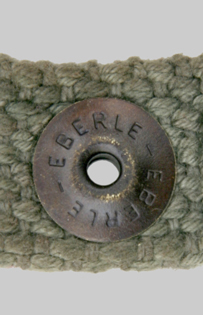
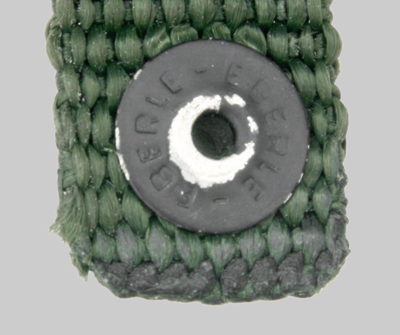
The snap fastener on the belt hanger is marked "Eberle." Eberle S.A. is a Brazilian firm that manufactures, among other things, textile fasteners. The identification of this bayonet as having been made by IMBEL is based on the identification of the belt hanger's fasteners. IMBEL is an abbreviation for Industry Material Bélico do Brasil (Military Material Industry of Brasil), the State arms factory formerly known as Fabrica de Itajuba (FI).

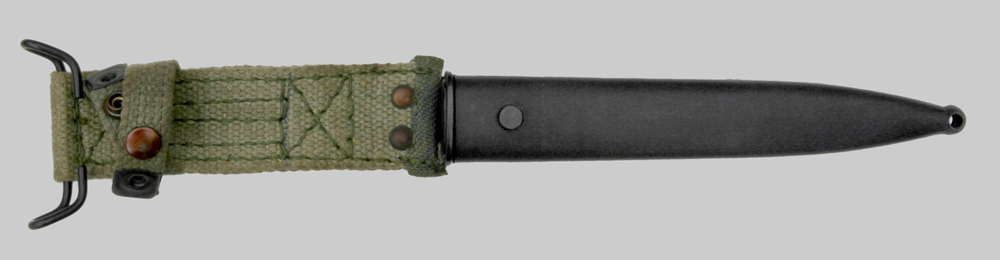
Brazil—IMBEL Type C for Springfield Armory SAR-48 Rifle
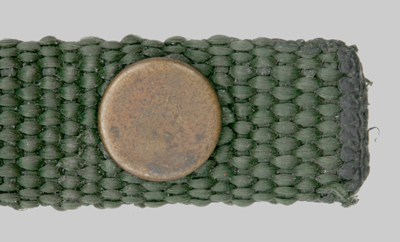
This is a commercial Type C bayonet shipped with the Springfield Armory Inc. SAR–48 rifle. The SAR–48 is a semi-auto FAL rifle produced by IMBEL, in Brazil, for commercial sale in the USA by Springfield Armory Inc. This example would have been produced in the 1980s. The SAR–48 bayonet has the M1963 spring catch. The bayonet is unmarked, with a black paint finish overall. The scabbard has a plastic body, with an integral nylon web belt frog. The throatpiece is positioned so the socket faces outward. The belt frog has the U.S. M1910-style wire belt hanger. Both the copper-plated glove fastener and rivets used on the belt hanger are marked "Eberle."

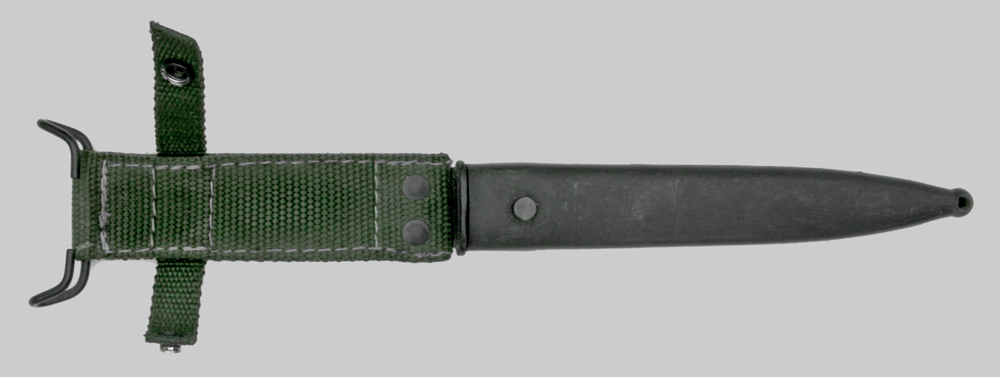
Germany—A. Eickhorn GmbH of Solingen (AES)
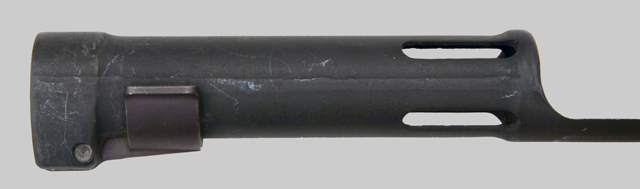
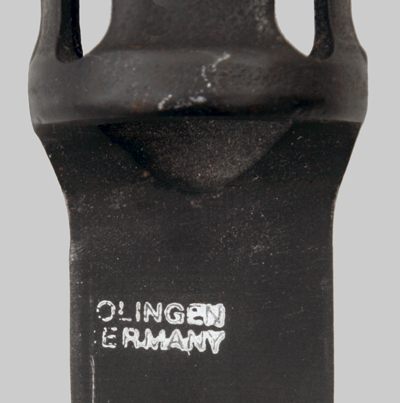
This Type C example was sold commercially by AES, a follow-on to the famous Carl Eickhorn Waffenfabrik that went bankrupt in 1975. This example has temporary export markings "Solingen Germany", suggesting that it was produced following German reunification in 1989. AES constructed the socket by casting, the only other use of this manufacturing technique besides the very last of FN's production. The rough finish and sprue line are evident. The socket and blade are parkerized, while the spring catch is blued. The plum-colored bluing is characteristic of 1990s AES bluing. The scabbard body is plastic, with an integral web belt hanger. The hilt strap's stippled glove fastener is also characteristic of AES products.

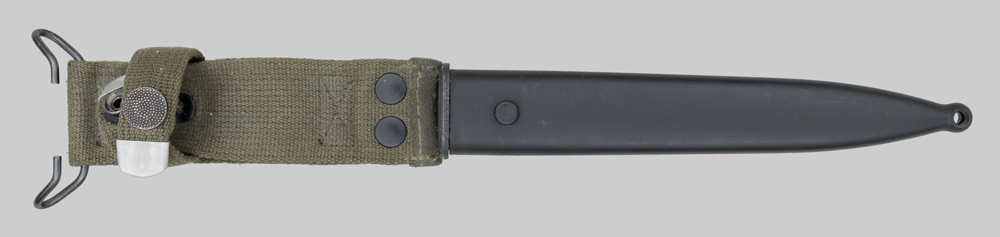
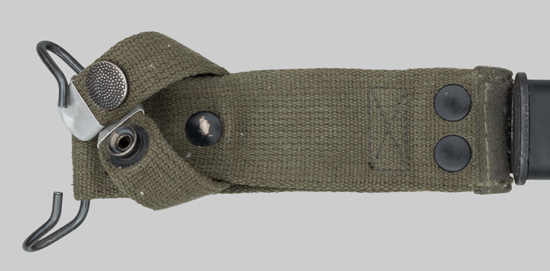
Rhodesia (now Zimbabwe)—Type C Bayonet

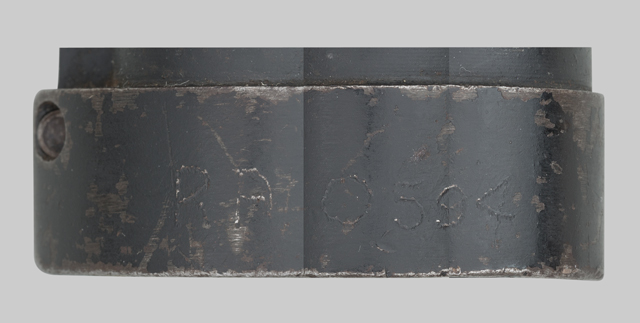
This Type C example was used in the Rhodesian Bush War of 1964–1979. It bears only the electro pencil serial number "RA 0594". The electro pencil "RA" serial number prefix was used by the Rhodesian Army.
The Rhodesian Army was equipped with the British L1A1 FAL variant. When Rhodesia declared its independence from Britain in 1965, an arms embargo stopped further arms shipments from Britain. South Africa began supplying the Rhodesian Army with the R1 FAL variant, which used the Type C bayonet. This example was found in a scabbard identical to the South African nylon scabbard pictured below and the scabbard was in this Pattern 1944 Belt Frog, dated 1956. This blending of South African and British equipment is consistent with the Rhodesian Army during the time of the Rhodesian Bush War.
South African R1 (FAL Type C) with Steel Scabbard
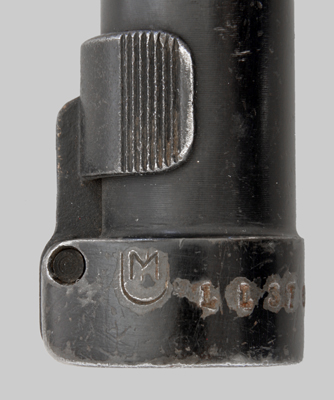
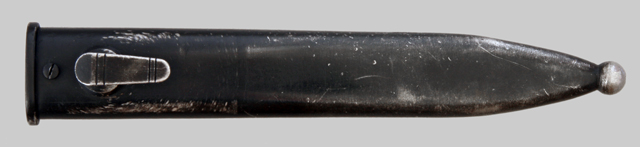
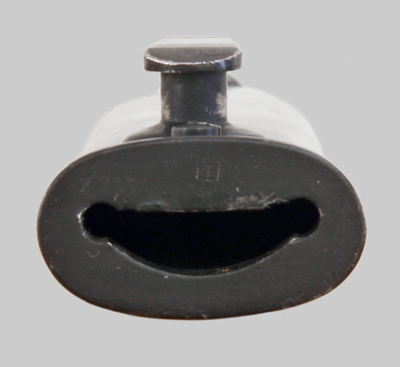
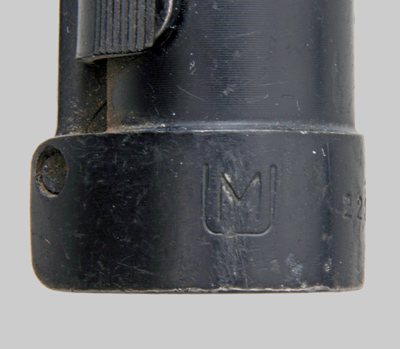
This example bears the South African government mark. The "M" inside a "U" represents "Union (of South Africa) Military." This example has the earliest type of FN-produced steel-bodied scabbard, as evidenced by the Belgian proofmark on the throatpiece and it's outward-facing orientation.

South Africa—So. African Manufactured R1 with Plastic Scabbard
This R1 lacks South African ownership markings, however, has a uniquely South African scabbard. Early R1 bayonets, like the example above, were purchased from FN. South Africa later began producing R1 bayonets and scabbards at the State-owned arms factory, ARMSCOR. The scabbard is an early pattern manufactured in South Africa. It is unusual in having a shiny plastic body, a transverse leg-tie hole in the ball finial, and a steel frog stud. South African-made R1 scabbards have the throatpiece oriented so that the socket faces inward when carried. Other countries' FAL Type C scabbards typically had the throatpiece oriented so that the socket faces outward when carried.

South Africa—So. African Manufactured R1 with Nylon Scabbard
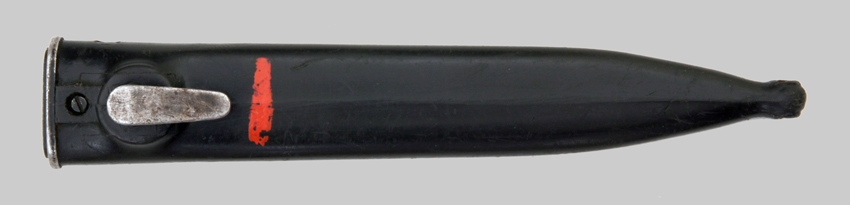
This South African R1 bayonet is one whose origin is evident by the Union of South Africa Military, "M" inside "U", property mark. This R1 example has the more common R1 scabbard with a nylon body with the integral frog stud and steel throatpiece shaped to accept either the R1 or South African No. 9 bayonet. Note how this scabbard also has the transverse leg-tie hole in the ball finial.

Page 3—The L1A1 and Related FN-FAL Bayonets
Bayonet Identification Guide Index Page
© Ralph E. Cobb 2009 All Rights Reserved